

7 Natural Ways to Reduce Chicken Mites in Winter
Winter often gives backyard chicken keepers a false sense of security when it comes to mites.
While cold temperatures can slow
mite activity, they don’t always eliminate mites altogether.
In fact, winter conditions can quietly create an environment where
mite problems linger unnoticed—until they flare up again.
This guide focuses on natural, compliant ways to reduce mite pressure in winter, support chicken comfort, and manage the coop environment so it’s less inviting to pests—without harsh chemicals or medical claims.
Winter mindset: The goal isn’t to “treat” mites, but to reduce hiding spots, support calm behavior, and keep the coop clean, dry, and well-managed.
Nesting Box Herbs: A Supportive Layer for Winter Coop Care

Nesting Box Herbs are an easy way to add a fresh, coop-friendly herbal layer in the areas chickens use most— especially during winter when birds spend more time indoors.
How Nesting Box Herbs Support Winter Mite Reduction
- Helps discourage pests by keeping nesting areas and corners less inviting
- Supports a calmer coop with soothing herbal aromas
- Keeps bedding fresher between cleanings and refreshes
- Pairs well with routine cleaning and roost-area maintenance
- Encourages comfortable nesting during colder months
How to use: Sprinkle into nesting boxes after refreshing bedding, and lightly add to problem areas such as corners or along bedding edges. Refresh whenever you clean.
SHOP NESTING BOX HERBSWhy Chicken Mites Can Still Be a Problem in Winter
Many people assume mites disappear in cold weather, but that’s not always true.
During winter, mites can:
- Hide deep in coop cracks and crevices
- Persist in dry bedding and roost joints
- Continue in coops that stay relatively warm
- Go unnoticed because chickens spend more time indoors
Because chickens are less active and daylight is shorter, early signs are often missed. Winter is a great time to do small “maintenance checks” before spring brings faster pest cycles.
Signs Your Chickens May Be Dealing With Mites in Winter
Winter mite issues are often subtle. Watch for changes in behavior rather than dramatic symptoms.
Common signs include:
- Chickens reluctant to roost at night
- Restlessness or frequent repositioning on the perch
- Excessive preening or feather picking
- Pale combs or reduced energy
- Dirty or irritated feathers around the vent area
These signs don’t confirm mites on their own, but they’re a signal to check your coop environment closely and inspect roosting areas where pests often hide.

Why Winter Conditions Can Make Mite Issues Worse
Winter changes how chickens live inside the coop.
Cold weather often means:
- Less ventilation to “keep warmth in”
- Deeper bedding layers that aren’t changed as often
- More time spent inside the coop
- Less natural sun exposure
These conditions can trap moisture, odors, and debris—making the coop more comfortable for pests to hang around. The goal is not a perfect, sterile coop; it’s a dry, fresh-smelling coop with consistent airflow.
7 Natural Ways to Reduce Chicken Mites in Winter
The goal in winter isn’t aggressive intervention—it’s consistent environmental management. Think “reduce the places mites like to hide” and “support chicken comfort.”

1) Focus on Coop Cleanliness (Even in Cold Weather)
While deep cleanouts may be less frequent in winter, regular maintenance still matters. Small cleanups done often can be more effective than a big cleanup done rarely.
Helpful habits:
- Remove damp or compacted bedding regularly
- Scrape droppings from roost bars weekly
- Check corners, joints, and roost connections
- Replace nesting material before it becomes dusty or soiled
Clean, dry spaces are naturally less attractive to mites—and they’re better for chicken breathing, too.

2) Support a Calm, Comfortable Coop Environment
Stress makes chickens more vulnerable to irritation and discomfort. Winter stressors can include temperature swings, drafts, overcrowding, and shorter daylight.
To reduce stress, focus on:
- Stable nighttime routines (same bedtime, same coop-close time)
- Dry bedding and comfortable roosts
- Enough space so birds aren’t forced into conflict
- Airflow that feels fresh but not drafty
Some keepers also use aromatic, coop-safe herbs as part of a calming routine and a fresher coop environment. Herbs are best used as a supportive addition alongside cleaning and ventilation.
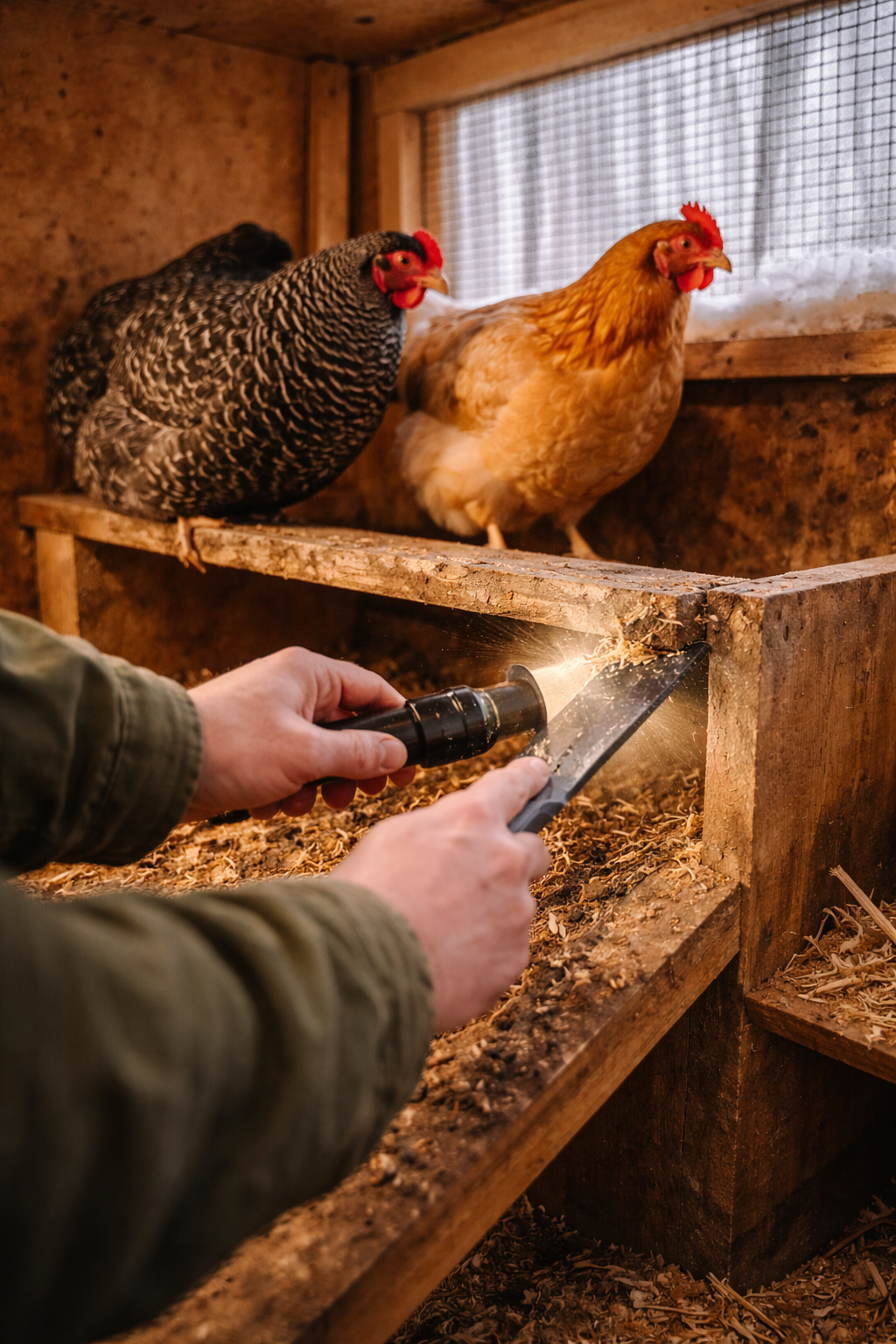
3) Pay Special Attention to Roosting Areas
Mites commonly hide near where chickens sleep. Roost bars, brackets, seams, and screw holes are common hiding spots—especially in older coops.
Quick roost checks:
- Inspect cracks, seams, and joints near roost bars
- Make sure roosts are smooth and dry (no splinters, no damp)
- Confirm roosts aren’t in the path of direct airflow
- Provide enough roost space to reduce nighttime crowding
If chickens avoid roosting or start sleeping on the floor, it’s often a sign something about the roost doesn’t feel comfortable.

4) Maintain Proper Ventilation Without Drafts
Ventilation is critical year-round—even in winter. Good airflow helps remove moisture and odors, keeps bedding drier, and makes the coop less inviting to pests.
Good winter ventilation should be:
- High on the walls (above roost level)
- Continuous (steady air exchange)
- Gentle (no direct stream of air on sleeping birds)
Fresh air matters more than “extra warmth” when it comes to long-term coop comfort. A dry, fresh coop helps chickens rest better through winter.

5) Use Natural Coop Additions to Discourage Mites
Some chicken keepers choose to use herbal blends in nesting boxes and coop areas as part of a broader management routine. This approach works best as a layer—not a replacement for cleaning and airflow.
When used consistently, herbs can support:
- A calmer coop feel
- A fresher-smelling bedding area
- Conditions that are less comfortable for pests to settle into
If you use herbs, refresh them regularly so bedding stays clean and dry.
Looking for a natural way to support a cleaner, calmer winter coop?↓
Shop Nesting Box Herbs
6) Keep Bedding Dry and Rotated
Moist bedding is one of the biggest contributors to winter coop problems. Dampness also makes cold feel colder and can lead to odors and irritation.
Helpful tips:
- Add fresh bedding more often instead of only adding deeper layers
- Remove wet spots promptly (especially near waterers)
- Avoid letting bedding compact tightly
- Rotate nesting material regularly
Dry bedding equals fewer hiding places—and it supports cleaner air.

7) Observe Chickens Regularly (Even When It’s Cold)
Winter routines change, but daily observation still matters. Small changes often appear before bigger issues develop.
Watch for:
- Changes in roosting behavior
- Feather condition and increased scratching/preening
- Energy levels and appetite
- Restlessness at bedtime
A quick look at the roost area and nesting area once a week can catch problems early—before spring makes everything faster.
A Gentle, Whole-Coop Approach Works Best
There’s no single step that “solves” mites in every coop. The most effective approach is layered and consistent:
- Clean environment
- Dry bedding
- Proper ventilation
- Comfortable roosts
- Calm coop atmosphere
Together, these steps help reduce mite pressure naturally while supporting overall chicken well-being.
Final Thoughts
Winter mite issues don’t have to become spring disasters. By focusing on environmental management, comfort, and consistent coop care, you can naturally reduce mite challenges during colder months—without harsh measures or reactive stress.
A calm, dry, well-ventilated coop supports healthier chickens year-round.

Nesting Box Herbs
- Increases egg laying naturally.
- Improves chicken health.
- Deters parasites: mites, lice, fleas & flies as well as mice, rats, raccoons, coyotes, opossums and more!
- On SALE!
- SHOP Nesting Box Herbs

